
A Grassland Without Grazers Is No Grassland at All
Yanasa TV News
A Grassland Without Grazers Is No Grassland at All
The U.S. Forest Service’s draft assessment for the Comanche National Grasslands has alarmed ranchers across southeastern Colorado and western Kansas. In more than 1,500 pages of analysis, the agency lists “livestock grazing” as a threat to multiple species of conservation concern, lumped together with “urbanization” and “industrial disturbance.”

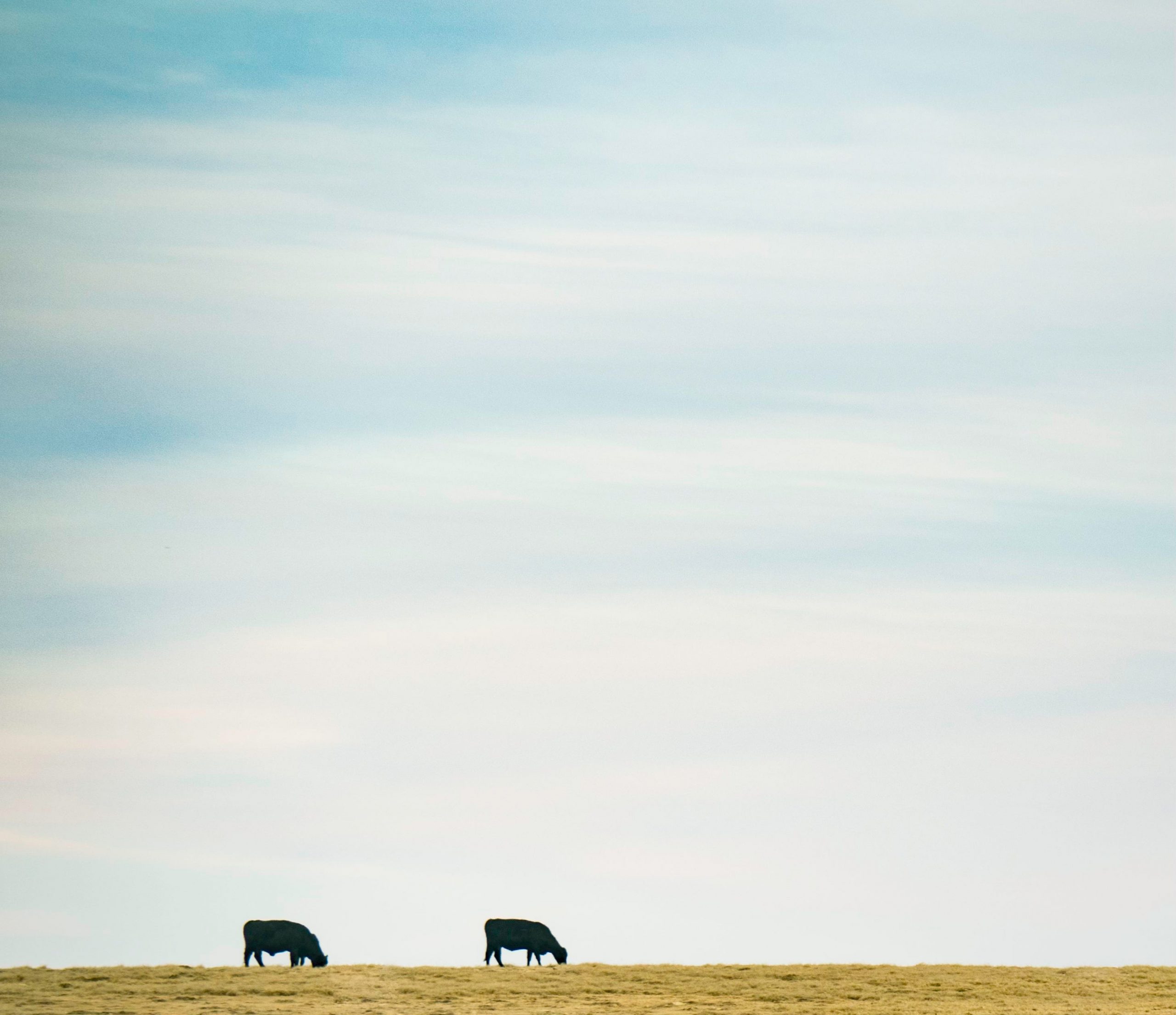
For the people who live on and care for these prairies, that framing is upside-down. Grazing isn’t a disruption to nature — it’s the heartbeat that keeps grasslands alive. The Great Plains evolved under millions of hooves long before the Forest Service existed. To erase that relationship from management plans is to misunderstand what a grassland is.
When “Assessment” Becomes Restriction
Local Ranchers Warn the Forest Service Is Paving the Way to Limit Grazing
Across the Comanche and Cimarron National Grasslands, ranchers are reading the Forest Service’s draft assessment with unease. Many believe its language—grouping livestock grazing alongside urbanization and industrial disturbance as threats—signals more than just bureaucratic phrasing. They fear it’s the opening move in a slow push to limit or eliminate grazing altogether.
During the public comment period, those concerns were explicit. In her submission on behalf of the Timpas Grazing Association, rangeland consultant Andee Leiningercriticized the agency for failing to consult permittees and landowners “for input regarding current ecological conditions, grazing management or vegetation management.” She warned that by relying on remote datasets instead of local monitoring, “the Forest Service is misrepresenting the health of these prairies and undermining the very partners who maintain them.”
At a meeting reported by the Plainsman Herald, permit holders pressed agency officials to clarify whether the assessment was merely diagnostic or a precursor to new restrictions. “We need to know if this is science or policy,” one producer said. “Because what you call a threat today becomes a regulation tomorrow.”
National groups echoed that sentiment. R-CALF USA, in its formal filing, accused the Forest Service of “laying the groundwork for future grazing reductions under the guise of conservation,” warning that broad threat designations could justify allotment cuts without site-specific evidence.
For these producers, the risk isn’t abstract. Once grazing is framed as a problem rather than a process, they say, the agency can reinterpret its own data to shrink permits, impose new rotations, or retire allotments altogether. The language alone creates regulatory precedent.
The Point Reyes Parallel
A Coastal Lesson for the Plains
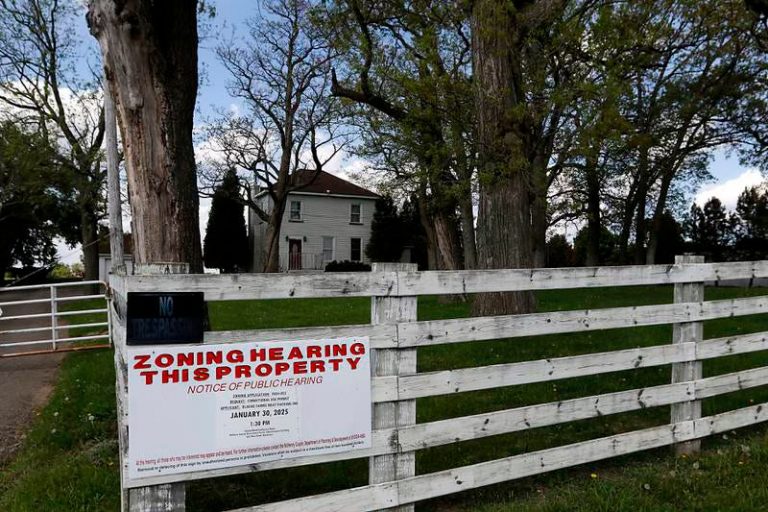
Ranchers in southeastern Colorado don’t have to look far to see how this story can end. In Point Reyes National Seashore, California, a nearly identical narrative unfolded over the past decade: an agency once tasked with preserving working landscapes redefined ranching as an ecological threat—and used that framing to remove it.
After years of lawsuits from environmental groups, the National Park Service agreed in early 2025 to a settlement that will close twelve of the fourteen remaining family ranches within Point Reyes. California’s Wildlife Conservation Board, operating under Governor Gavin Newsom’s administration, contributed millions toward the buyouts, and allies such as Rep. Jared Huffman helped broker the final deal.
Tucked behind the headlines is a twist few ranchers saw coming: the $10 million earmarked for Point Reyes restoration appears to have been secured before the buyout deal was public, and without notifying the ranch families directly. According to The Press Democrat, the funding was embedded in the state budget months before the settlement was announced, yet affected ranchers say they were never informed that the money was even available. “It’s shocking to me,” rancher Kevin Lunny told the paper. “All I know is when (the Nature Conservancy) appropriated this money, it was far from being settled.”
Lunny and others argue that this stealth funding arrangement not only undermines transparency, but tilts mediation toward the outcome that the state and NGOs already favored. If restoration dollars were already in hand, the financial incentives for ranchers to agree to exit become much stronger. Ranchers also say they were blocked from making infrastructure improvements during the litigation morass, while TNC is now slated to receive public funds to “modernize fencing and water systems” on lands now vacated. Dave Evans, the last holdout who did not sign a buyout, claims he has been barred from even basic system repairs and says the Park Service refuses to work with him: “They purposefully gave me a future … that was very meager and unsustainable.”
In August 2025, the Wildlife Conservation Board awarded the first of the funds consisting of $2.7M to a nonprofit team to advance “restoration” work at Point Reyes National Seashore (an NPS unit). Multiple outlets note this is part of a larger, state-created $10M pool (“Point Reyes Provision”) specifically for projects on that federal property.
Former Point Reyes rancher Bill Niman, who resisted the removal, said the decision “erased 160 years of pastoral heritage under the false idea that cattle and conservation can’t coexist.”
To many on the High Plains, the Comanche draft assessment sounds like the same script—only without the ocean view. Both hinge on distant modeling, outsider litigation pressure, and policy language that equates management with exclusion. Both reduce complex ecosystems to paperwork categories of “threats” and “stressors.” And in both, it is the people who live with the land who stand to lose the most.
The lesson from Point Reyes is clear: once federal managers decide that grazing conflicts with conservation, even generations of stewardship and thriving ecosystems are not enough to save it. Whether on coastal pastures or prairie grasslands, the danger is not in the cows—it’s in the classification.
Beyond Point Reyes and Comanche Why The Wording Matters
Ranchers say the Comanche draft isn’t an isolated wobble—it fits a broader pattern in which Forest Service planning or litigation outcomes tighten the screws on grazing.
- Utah – Fishlake National Forest. In February 2025, a coalition of Utah ranchers sued the Forest Service over new grazing rules on the Southern Monroe Mountain allotments, calling the agency’s stubble-height and use-standards “arbitrary” and not grounded in the best available science; the challenge targets the EIS that now governs those permits.
- New Mexico – Lincoln National Forest (ESA). Conservation groups won a ruling faulting the Forest Service for authorizing grazing that didn’t meet forest-plan goals “to bring grazing use into balance with available forage,” pushing the agency toward stricter compliance in occupied habitat. Producers view these ESA-driven decisions as a back-door ratchet on allotments.
- Arizona – Tonto National Forest (riparian). Environmental groups are pursuing fresh actions to curb or halt cattle access in sensitive riparian reaches, alleging widespread damage and lax enforcement. Whether or not the claims prevail, they pressure the Forest Service to clamp down on permittees in contested areas.
Closer to home, Comanche/Cimarron permittees and the Timpas Grazing Association argue that the draft leans on questionable occurrence records and remote datasets while labeling “livestock grazing” as a threat, a framing they fear will be used to justify future cuts.
To be fair, the Forest Service isn’t monolithically anti-grazing: national guidance and recent briefs actively promote targeted grazing as a vegetation and fuels tool. But ranchers’ point is about which vision wins when plans and lawsuits collide. If “grazing” is classified as a stressor in the paperwork, restrictions tend to follow in the pasture.
Under Secretary of Agriculture Brooke Rollins, the administration shifted federal land policy away from “conservation-as-a-use.” While Rollins moved to rescind the 2001 Roadless Rule at the Forest Service, the Interior Department (which oversees the BLM, not USDA) proposed rescinding the 2024 Public Lands “conservation leasing” rule, arguing it improperly prioritized non-use over multiple use. Interior’s notice opened in September 2025, with the Federal Register describing a rollback of the Conservation and Landscape Health Rule, and Interior’s press office framing it as restoring BLM’s statutory balance for grazing, energy, and other uses. Newswires summarized the move as effectively ending conservation leasing before it got off the ground.
The Keystone Process: Grazing as a Force of Renewal
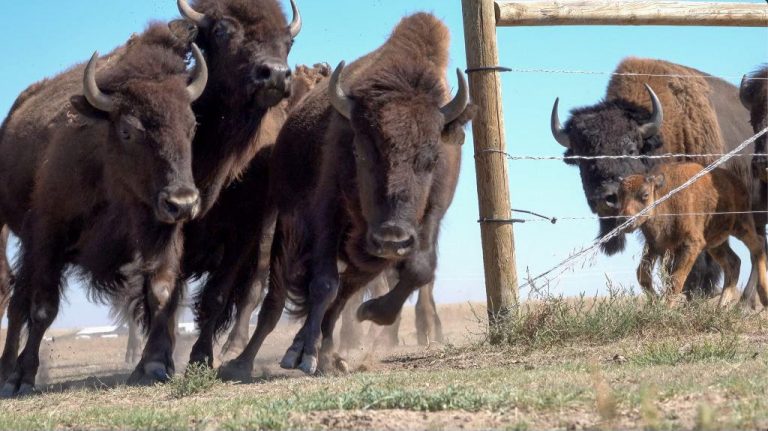
Ecologists describe grazing as a keystone process, meaning the ecosystem literally depends on it. For thousands of years, bison, elk, pronghorn, and deer shaped the plains through a cycle of grazing, trampling, and nutrient deposition that maintained biodiversity and soil fertility. When those native herds declined, cattle inherited their role.
Scientific evidence is overwhelming that well-managed grazing sustains — not degrades — prairie health.
- Plant Regeneration and Root Health:
Studies from Kansas State University show that periodic defoliation by grazers stimulates tillering and root growth in warm-season grasses, increasing below-ground carbon storage and drought resilience (Derner & Schuman, Frontiers in Ecology and the Environment, 2007). - Nutrient Cycling:
The USDA’s Agricultural Research Service has documented how grazing accelerates nitrogen and phosphorus turnover through dung and urine, supporting soil microbial diversity and native forb recruitment (McNaughton et al., Ecological Applications, 1998; Herrick et al., Rangeland Ecology & Management, 2018). - Habitat Heterogeneity:
Mixed-intensity grazing produces a “patch mosaic” landscape of short and tall vegetation that benefits grassland birds, pollinators, and small mammals (Fuhlendorf & Engle, BioScience, 2001). This spatial diversity is critical for species like the lesser prairie-chicken and mountain plover. - Fire and Fuel Balance:
ARS research at the Central Plains Experimental Range demonstrates that moderate grazing reduces fine-fuel buildup, lowering wildfire intensity while allowing periodic prescribed fire to maintain native species (Derner et al., Rangeland Ecology & Management, 2016).
Without grazers, dead plant matter accumulates, woody shrubs invade, and fire risk increases — precisely the conditions federal managers claim to be preventing.
When Data Replaces Dirt
Stakeholders told The Fence Post that the Forest Service’s draft assessment draws heavily on remote databases such as iDigBio rather than field inventories. Some “species of concern” listed haven’t been documented in decades, and the assessment downplays on-the-ground monitoring showing stable or improving rangeland health.
The problem isn’t that the agency is collecting data — it’s where the data came from. Modeling can’t substitute for boots in the dust. “They’re calling this a threat from behind a computer,” said one local rancher. “Out here, you can see the land healing under managed grazing.”
Cows as Conservation Partners
Modern range science agrees: properly managed cattle are ecological surrogates for bison. Through rotational or patch-burn grazing, they replicate the migratory disturbance patterns that maintain prairie ecosystems.
The Society for Range Management recognizes this principle explicitly, and the 2013 Interagency Ecological Site Handbook developed by NRCS, USFS, and BLM lists grazing as a key “driver of ecological dynamics.” When managers remove grazing altogether, plant diversity and soil function decline, and invasive species such as juniper and cheatgrass expand (Twidwell et al., Rangeland Ecology & Management, 2013).
Even the Forest Service’s own Rocky Mountain Research Station has found that removing livestock on mixed-grass prairies leads to reduced native cover and altered hydrology within a decade (Augustine et al., Ecological Applications, 2020).
Cattle, when managed with rest-rotation, adaptive stocking, and good water distribution, are not the problem. They are the tool.
A Call for Science, Not Semantics
Labeling “grazing” as a universal threat may sound cautious, but it’s scientifically lazy. The distinction that matters is how grazing is done — its timing, intensity, and distribution. The same process that can harm a riparian area when mismanaged can also restore it when done right.
If the Forest Service truly wants to follow the best available science, it should update its language to reflect what range ecologists already know: that functional grazing is essential to grassland resilience. The assessment’s blanket phrasing may protect the agency from lawsuits, but it also endangers the ecological truth on which sound management depends.
Let the Land Speak
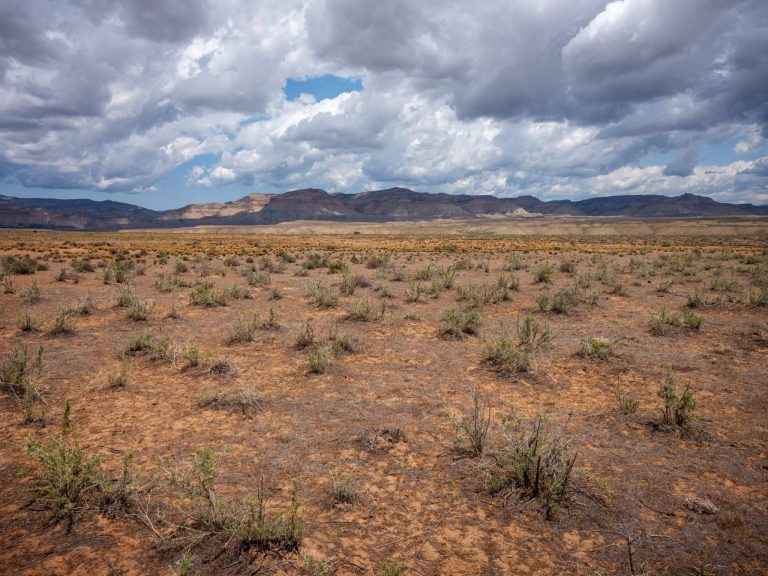
The Comanche and Cimarron National Grasslands are not relics to be preserved under glass. They are living systems built by grazers and dependent on them still.
Healthy prairies need hooves, manure, and movement. The men and women who run cattle here aren’t the problem — they’re carrying on a 10,000-year partnership between herbivores and grass.
If the Forest Service truly wants to protect these lands, it should look not at its models but at the soil: teeming with life, aerated by roots, and sustained by the very animals it now calls a threat.
Key Scientific References
- Derner, J. D. & Schuman, G. E. (2007). Carbon sequestration and rangelands: A synthesis of land management and precipitation effects. Frontiers in Ecology and the Environment, 5(2), 84-90.
- Fuhlendorf, S. D. & Engle, D. M. (2001). Restoring heterogeneity on rangelands: Ecosystem management based on evolutionary grazing patterns. BioScience, 51(8), 625-632.
- McNaughton, S. J. et al. (1998). Grazing as an ecological process: Nutrient cycling and plant community dynamics.Ecological Applications, 8(2), 597-607.
- Herrick, J. E. et al. (2018). Long-term grazing impacts on soil health indicators across western rangelands.Rangeland Ecology & Management, 71(3), 343-352.
- Twidwell, D. et al. (2013). The rising Great Plains fire campaign: Redefining grazing-fire interactions. Rangeland Ecology & Management, 66(5), 545-553.
- Augustine, D. J. et al. (2020). Long-term removal of herbivores alters plant diversity and soil processes in mixed-grass prairie. Ecological Applications, 30(5), e02180.