
How a Public-Health Mandate Became a Branding Weapon—and Why Small Producers Pay the Price.
Yanasa TV News
“Food safety” is supposed to be neutral. Scientific. Apolitical.
A simple promise to the public: what you eat won’t make you sick.
But spend enough time around small farmers, processors, raw-milk dairies, pasture-based meat operations, and local food hubs, and a different question starts to surface—quietly at first, then with growing urgency:
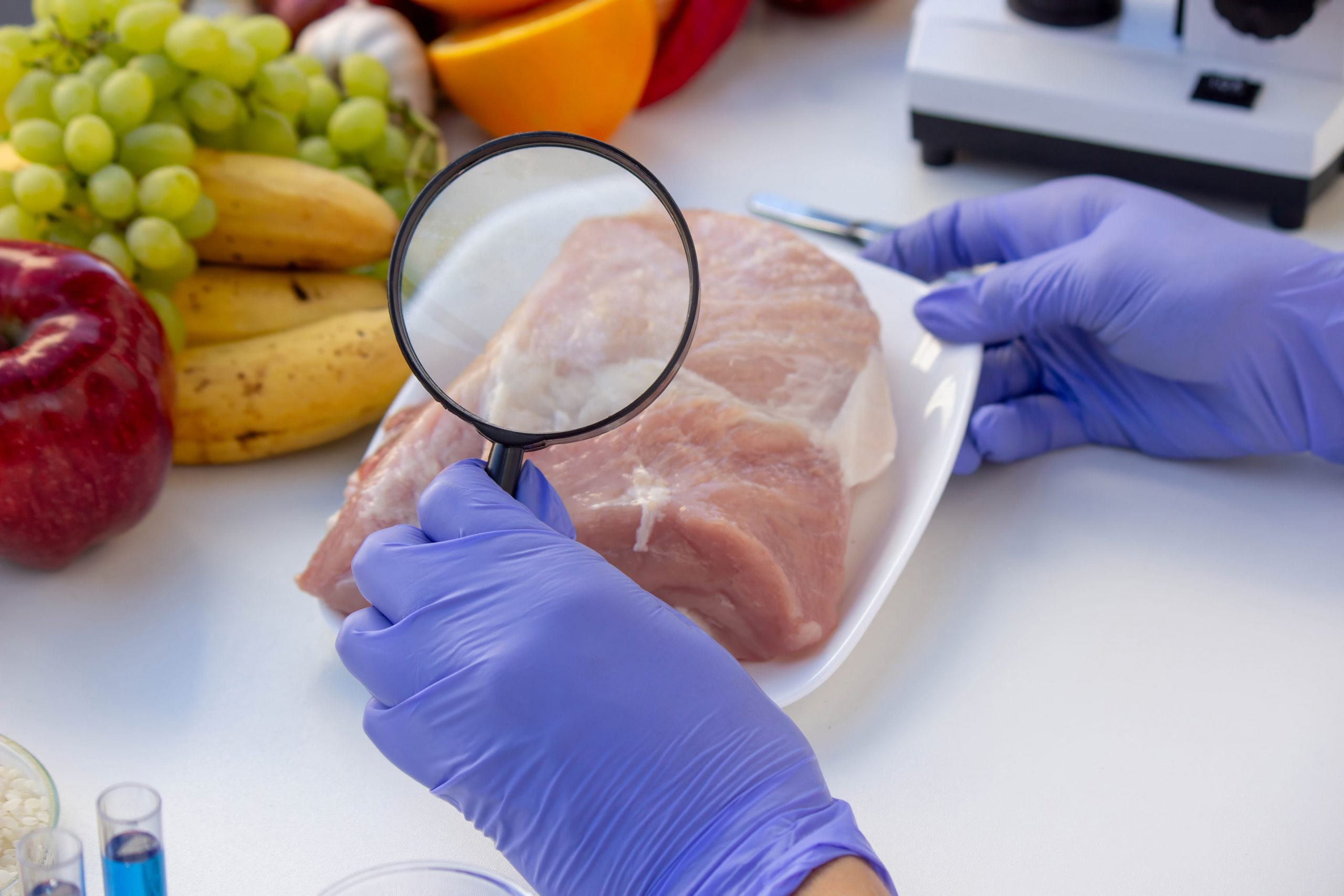
Who actually owns food safety in America?
Because the people who talk the most about it often seem the least affected when things go wrong.
The Illusion of Equal Standards
On paper, food safety regulations apply to everyone. In reality, enforcement is anything but equal.
A raw-milk dairy selling 40 gallons a week faces relentless inspections, mandatory shutdowns after a single positive test, and public health alerts that name the farm outright.
Meanwhile, multinational processors can distribute millions of pounds of product across state lines before a recall is issued—often weeks after illnesses begin, and frequently without a single executive name attached.
The system claims neutrality. The outcomes say otherwise.
When “Compliance” Becomes a Competitive Advantage
Large food corporations didn’t just adapt to modern food safety rules.
They helped design them.
The compliance burden—HACCP plans, digital traceability, third-party audits, stainless-steel retrofits, lab testing regimes—costs real money. Millions of dollars, in many cases.
For multinational firms like Nestlé or Tyson Foods, those costs are absorbed into scale. Compliance becomes a moat.
For a small producer, it can be existential.
Food safety stops being a health baseline and becomes a market filter—one that quietly favors consolidation.
Naming Names: The Asymmetry of Public Shaming
Here’s a pattern farmers have noticed for years:
- Small producer outbreak:
Immediate press release. Farm name included. Product type emphasized. Consumer alert tone escalated. - Large processor outbreak:
Brand softened. Product codes emphasized. Corporate language deployed. Responsibility diffused across “supply chain partners.”
When a local dairy tests positive for Campylobacter, the farm’s name trends on social media within hours.
When a national brand is linked to hundreds of illnesses, the headline reads: “Product Recall Issued.”
No faces. No farms. No executives.
Food safety, in practice, comes with reputation shields—and they are not evenly distributed.
The Regulatory Triangle
At the center of this imbalance sits a familiar trio:
- FDA
- USDA
- CDC
These agencies aren’t malicious. But they are structurally aligned with scale.
Their rules assume:
- Centralized processing
- Homogeneous inputs
- Uniform distribution
- Industrial sanitation models
That works—if you’re industrial.
But when the same framework is applied to a pasture-based creamery, a mobile poultry processor, or a farmstead butcher shop, it often breaks reality instead of protecting health.
Real Risk vs. Managed Risk
Here’s the uncomfortable truth rarely discussed in press conferences:
Industrial food systems don’t eliminate risk. They manage it statistically.
Small systems aim to prevent it upstream.
- Short supply chains mean faster traceback—but also faster public blame.
- Local sales reduce exposure—but increase visibility.
- Transparent sourcing invites trust—but also scrutiny.
Large systems rely on dilution:
- One bad batch disappears inside millions of pounds.
- Liability is spread across insurers, suppliers, subsidiaries.
- Illnesses become data points, not stories.
Food safety becomes less about prevention and more about damage control.
When “Safe” Means “Approved”
Another quiet shift has taken place over the last two decades:
“Safe” no longer means proven harmless over time.
It increasingly means approved by the right authority.
Feed additives, processing aids, sanitizers, coatings, and packaging chemicals enter the system under GRAS determinations, pilot exemptions, or industry-submitted safety dossiers.
If something goes wrong later, responsibility becomes a maze:
- Was it misuse?
- Improper labeling?
- Consumer handling?
- Farmer error?
- Or simply “no definitive causal link”?
Approval becomes a shield—not a guarantee.
Small Producers as Perfect Scapegoats
Why are small producers such convenient enforcement targets?
Because they are:
- Easier to inspect
- Easier to shut down
- Easier to name
- Less able to litigate
- Less politically connected
And because disciplining them signals action without confronting systemic fragility.
It’s far simpler to close a raw-milk dairy than to interrogate why centralized processing failures affect entire regions at once.
The Branding of Safety
“Food safety” has become more than a public health concept.
It’s a marketing asset.
- “USDA Inspected”
- “FDA Approved”
- “Third-Party Certified”
- “Science-Based”
These labels reassure consumers—but they also reinforce a hierarchy of legitimacy.
Local food systems are framed as risky alternatives rather than structurally resilient models.
Meanwhile, industrial food—despite repeated nationwide recalls—retains the presumption of safety by default.
The Question No One Asks
When outbreaks happen, the public debate always circles the same question:
How did this slip through?
But the more important question is never raised:
Who benefits from the way food safety is defined, enforced, and branded?
Because the current system doesn’t just protect consumers.
It protects market dominance.
What Food Safety Could Be
A genuinely consumer-first food safety system would:
- Scale standards appropriately
- Distinguish between local and national exposure risk
- Stop using public shaming as enforcement
- Treat transparency as a strength, not a liability
- Hold scale accountable proportionally
Instead, we’ve built a system where:
- The smallest producers carry the sharpest knives
- The largest players carry the softest language
- And “food safety” quietly doubles as a consolidation strategy
It should matter, but it doesn’t.
Food safety matters. Deeply.
But when the phrase itself becomes a branding weapon—when it’s used to discipline the visible and excuse the powerful—it stops serving the public and starts serving the market.
And that raises a final, unavoidable question:
If food safety truly belongs to the consumer…
why does it so often protect everyone else first?