
The farmland protection law that almost did the opposite — and why the danger isn’t over
Yanasa TV News
For decades, Connecticut told its farmers a simple story:

If you keep farming the land, the state will protect you from being taxed off of it.
That promise was embedded in PA 490, the state’s farmland, forest, and open-space assessment program. It was designed to shield working land from speculative development pressure by taxing it based on use, not on what a developer might someday pay for it.
In 2025, that promise nearly collapsed.
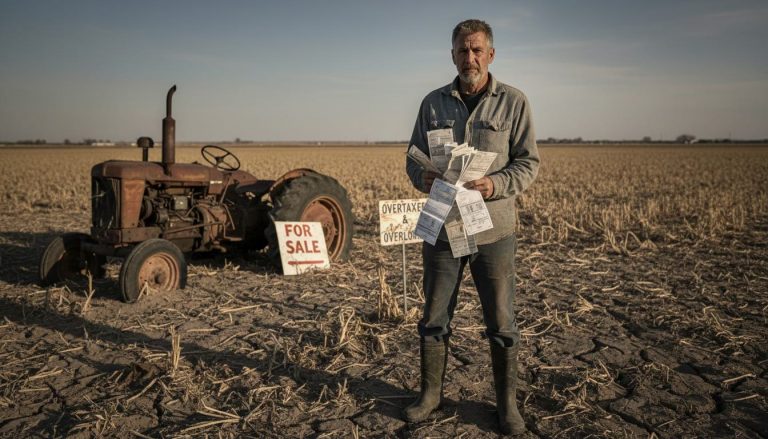
Across rural and semi-rural towns in Connecticut, farmers opened reassessment notices and saw something they never expected: tax bills jumping hundreds of percent — not because they changed how they farmed, but because the state’s valuation machinery quietly shifted underneath them.
Same land.
Same crops.
Same livestock.
Very different tax burden.
For some families, it was an existential threat.

The Law That Was Meant to Protect Farms
PA 490 exists because farmland is uniquely vulnerable to taxation.
As nearby land is developed, raw acreage can appear — on paper — to be extremely valuable. If farms were taxed at full market value, many would be forced to sell land simply to pay annual property taxes, accelerating exactly the kind of development the state claims to want to prevent.
So PA 490 created a workaround:
land enrolled in the program is assessed according to its agricultural use value, not its speculative market value.
For years, that system worked quietly. Farms stayed intact. Towns collected predictable revenue. Development pressure stayed somewhat in check.
Then came reassessments.
When the Spreadsheet Changed
In 2025, multiple towns conducted property revaluations that rippled straight through PA 490 land classifications.
Farmers began reporting:
- Assessments jumping 400%, 600%, even higher
- Tax bills multiplying overnight
- Land valued less like working farmland and more like “future opportunity”
In many cases, no explanation was given beyond technical language: updated formulas, revised assumptions, new comparables.
But the effect was unmistakable.
Land that had been economically viable under PA 490 suddenly wasn’t.
One farmer described it bluntly:
“They were taxing us like developers, not farmers.”
Another put it this way:
“We would have had to sell acreage just to keep the rest.”
The land didn’t change.
The soil didn’t change.
The farm didn’t change.
The methodology did.
Why This Was So Dangerous
For family farms, property tax increases aren’t an inconvenience — they’re a forcing mechanism.
Unlike other businesses, farms can’t simply raise prices overnight. Margins are thin. Income is seasonal. Land is often the only significant asset.
When taxes spike suddenly, the options are grim:
- Sell parcels of land
- Subdivide for development
- Take on debt against already-thin margins
- Exit farming altogether
Ironically, the very program designed to prevent farmland loss was, for a moment, accelerating it.
PA 490 wasn’t formally repealed.
It was hollowed out by implementation.
The Pushback That Changed the Outcome
What stopped it wasn’t a quiet administrative correction.
It was pressure.
Farmers organized. They called town halls. They contacted legislators. They spoke to reporters. They made it clear that something was wrong — not philosophically, but practically.
The message was simple:
“If this stands, farming here becomes impossible.”
And slowly, the system responded.
Assessors revised valuations. State officials clarified interpretations. Some increases were rolled back. In certain cases, land values were recalculated downward.
The immediate crisis eased.
That reversal matters — because it proves something important:
these systems are not immutable.
They move when pushed.
Why This Isn’t Over
The rollback doesn’t mean the risk is gone.
Several unresolved issues remain:
- Assessment methodologies remain opaque
- Local discretion varies widely town to town
- Fiscal pressure on municipalities hasn’t disappeared
- PA 490’s protections depend heavily on interpretation, not just statute
Nothing structural prevents a similar reassessment shock from happening again — either in Connecticut or elsewhere.
And Connecticut is far from unique. Many states rely on use-value assessment programs with similar vulnerabilities baked in: formulas few farmers can audit, assumptions that quietly drift, and budget pressures that always look for politically quiet revenue sources.
Working land, ironically, fits that description all too well.
A Near Miss, Not a Victory Lap
Connecticut’s family farms survived this episode — barely.
Not because the system worked as designed, but because the people inside it refused to stay quiet when it didn’t.
That distinction matters.
PA 490 is still on the books.
The land is still under pressure.
And the same forces that caused this scare haven’t gone away.
This wasn’t a victory.
It was a warning shot.
And next time, whether farms survive may depend on who’s paying attention early enough to stop the spreadsheet before it decides the future of the land.