
The growing battle over who controls the tools that run modern agriculture.
Yanasa TV News
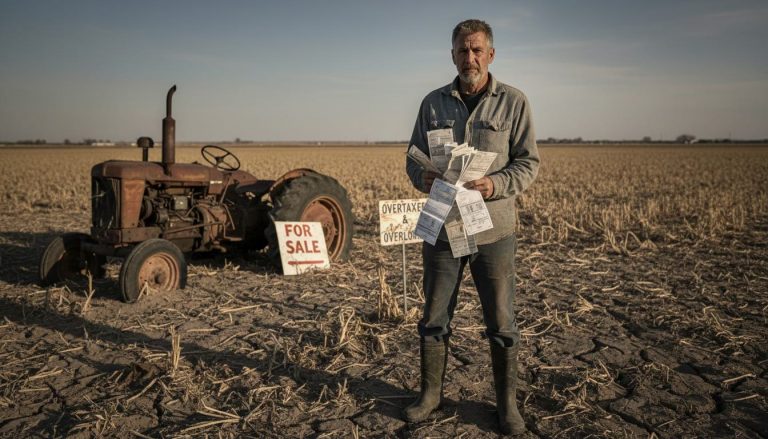
For generations, fixing farm equipment was simply part of farming.
When a tractor broke down, farmers didn’t call a lawyer. They grabbed a wrench.

But in the age of software-controlled machinery, that tradition is colliding with a new reality: manufacturers increasingly control who is legally allowed to repair the machines farmers depend on.
Now the federal government is stepping deeper into the fight.
The Federal Trade Commission (FTC) has intensified its scrutiny of repair restrictions imposed by major equipment manufacturers, part of a broader national push to expand “right-to-repair” protections across industries ranging from electronics to automobiles—and increasingly, agriculture.
For farmers operating multimillion-dollar equipment fleets, the stakes are enormous.
The question is no longer just whether a tractor can be repaired.
It is who is legally allowed to repair it—and at what cost.
The Modern Tractor Is a Computer
Today’s agricultural equipment bears little resemblance to the machines farmers operated a generation ago.
Modern tractors, combines, and planters are controlled by complex software systems that regulate:
- engine performance
- emissions systems
- hydraulic functions
- GPS guidance
- autonomous steering
- yield monitoring
These systems rely on proprietary diagnostic software owned by manufacturers.
Without access to those digital tools, many repairs cannot legally or practically be completed.
Manufacturers argue this structure protects intellectual property, emissions compliance, and equipment safety.
Farmers counter that it has created a repair system that effectively locks them out of fixing their own machines.
When a piece of equipment fails during planting or harvest, a farmer may have only one option: wait for an authorized dealer technician.
In rural areas, that wait can stretch days—or longer.
During critical planting or harvest windows, those delays can cost thousands of dollars per hour.
The FTC Steps In
The FTC’s interest in repair restrictions accelerated after the agency released a major policy report titled “Nixing the Fix.”
The report concluded that many manufacturer repair restrictions lacked clear evidence of consumer benefit and could potentially violate competition laws.
Following that report, the FTC announced it would prioritize enforcement actions targeting companies that impose unreasonable repair barriers.
While the agency’s focus initially centered on consumer electronics, the agricultural sector quickly became part of the conversation.
Farm groups, independent mechanics, and state lawmakers have increasingly argued that agricultural equipment manufacturers maintain near-total control over repair access.
Those concerns have triggered FTC investigations and policy scrutiny aimed at determining whether such restrictions represent unfair methods of competition.
Farmers Push Back
Farmers have been among the most vocal advocates of right-to-repair legislation.
The issue gained national attention when producers began publicly sharing stories of equipment breakdowns that could not be repaired without manufacturer software access.
In some cases, farmers resorted to downloading unauthorized firmware tools or seeking technicians who operate in legal gray areas.
Others described equipment sitting idle in fields while waiting for dealer technicians authorized to unlock diagnostic systems.
For farmers running time-sensitive operations, the frustration is not theoretical.
A broken tractor during harvest is not merely an inconvenience—it can determine whether a crop is successfully brought in or lost to weather.
The result has been a growing political movement across farm states demanding repair rights.
States Begin Passing Repair Laws
While federal regulators investigate, many states have begun passing their own right-to-repair laws.
Several states have enacted legislation requiring equipment manufacturers to provide farmers and independent mechanics with access to diagnostic tools, parts, and repair documentation.
These laws vary widely in scope.
Some require manufacturers to provide software access on fair terms.
Others focus primarily on ensuring parts and manuals are available to independent repair shops.
The agricultural equipment industry has strongly opposed many of these proposals, arguing that unrestricted access could:
- compromise emissions compliance
- expose proprietary software systems
- create safety risks if machines are improperly modified
Manufacturers also warn that complex equipment software cannot simply be opened without risking unintended system failures.
The Manufacturer Response
Major farm equipment manufacturers have responded to the growing pressure with a series of voluntary repair agreements.
Some companies have pledged to expand access to parts and diagnostic tools through partnerships with farm organizations.
Industry representatives argue that these agreements demonstrate that federal regulation is unnecessary.
They say modern equipment software systems require careful control to ensure safety and environmental compliance.
Opening those systems broadly, manufacturers warn, could allow unauthorized modifications that bypass emissions systems or safety protections.
Critics counter that voluntary agreements leave manufacturers with ultimate control over access.
For many farmers, the concern remains simple: if you buy a $500,000 machine, should you be allowed to fix it?
A Larger Fight Over Digital Ownership
The right-to-repair fight in agriculture reflects a broader transformation taking place across the economy.
Increasingly, products once considered mechanical tools are becoming software-controlled platforms.
From smartphones to tractors, ownership is increasingly governed by software licenses rather than traditional property rights.
In practice, this means buyers may own the physical machine—but not the software that makes it run.
For agriculture, where machinery reliability determines harvest success, that distinction carries enormous consequences.
The FTC’s investigation is part of a larger national debate over how digital ownership should function in the modern economy.
Why This Matters for American Agriculture
If federal regulators ultimately decide that repair restrictions violate antitrust or consumer protection laws, the consequences could reshape the agricultural equipment market.
Possible outcomes include:
- mandated access to diagnostic software
- expanded independent repair markets
- new competition in agricultural equipment servicing
- reduced downtime during critical planting and harvest periods
For farmers, the issue cuts to the heart of agricultural independence.
Rural producers have historically relied on self-sufficiency—repairing machinery, maintaining equipment, and keeping operations running without outside control.
Right-to-repair advocates argue that modern software restrictions threaten that tradition.
The FTC’s growing involvement suggests that Washington is beginning to take those concerns seriously.
But the battle over repair rights is far from settled.
And for many farmers watching the debate unfold, the outcome may determine whether the machines that power modern agriculture truly belong to the people who bought them.