
Inside Johnston County’s Proposed UDO — And Why Rural Residents Should Be Paying Attention
Yanasa TV News
North Carolina: Johnston County is in the process of rewriting its development rules.

Buried inside the more than 600-page draft Unified Development Ordinance (UDO) is a sentence that may appear minor at first glance — but could quietly reshape small-scale food production across rural portions of the county.
The draft states:
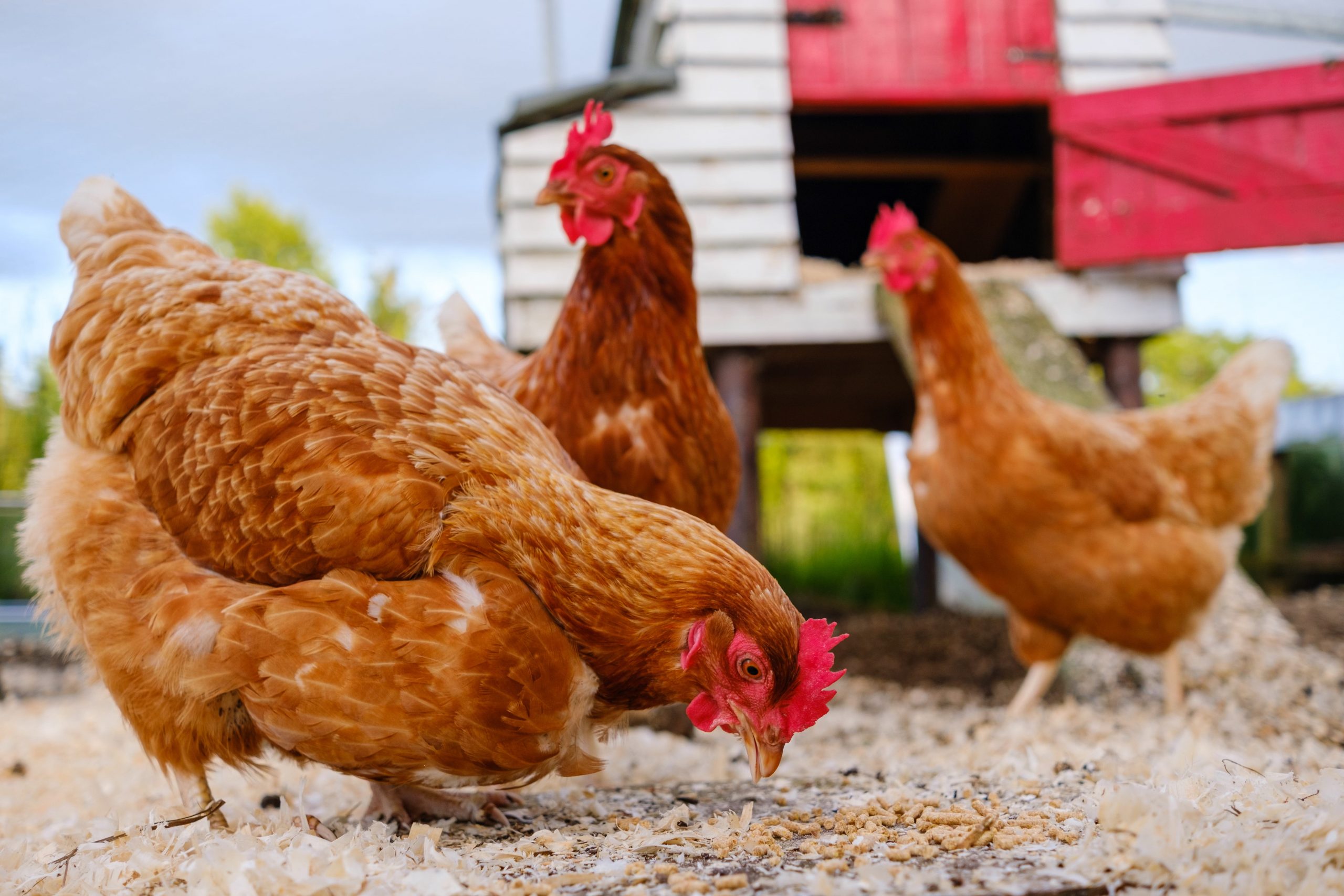
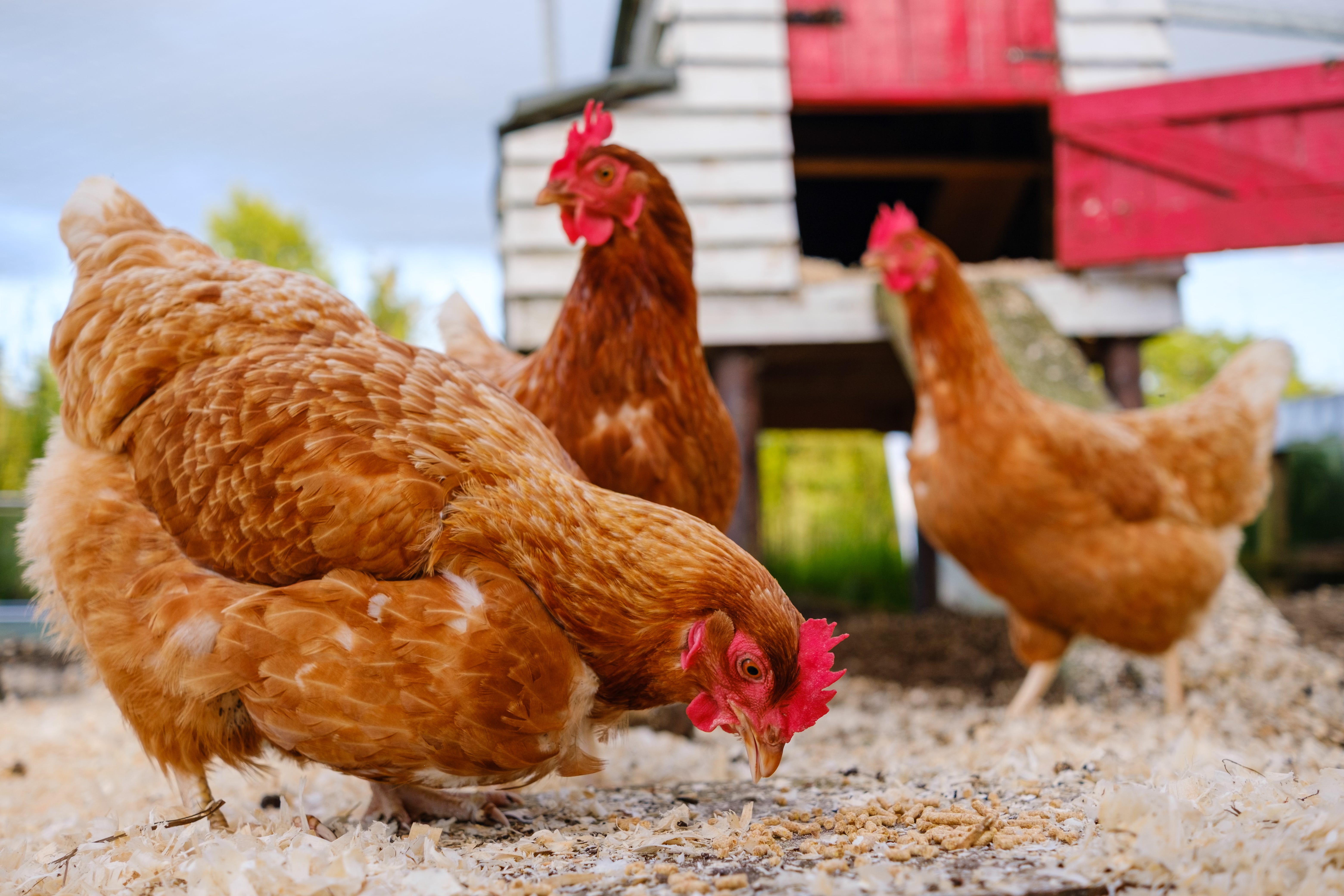
“Residential districts. Limit: Up to 4 hens. Roosters: Prohibited.”
The language appears in the December 22, 2025 revision of the proposed UDO under the section governing livestock and fowl in residential districts.
Four hens.
No roosters.
Sanitation standards required.
On its face, that may sound reasonable — even moderate. But once you follow the document trail, a more important question emerges:
What exactly counts as “residential”?
Because in this draft, “residential” does not simply mean “subdivision.” And that distinction is critical.
Following the Document Trail
The poultry language appears under the use standards for fowl in residential districts. The draft reads:
“Residential districts.
i. Limit. Up to 4 hens.
ii. Roosters. Prohibited.
iii. Sanitation. Henhouses must be clean, dry, odor-free, and properly ventilated.”
The rule is clear. It is simple. It is uniform.
But determining who this applies to requires turning to Table B.1.1 – Former and Proposed Zoning Districts, where the draft identifies which zoning categories fall under the heading “Residential districts.”
Those districts include:
- AR — Agricultural/Rural Residential
- AG — Agricultural
- AE — Agricultural Estate
- ER — Estate Residential
- RN — Residential Neighborhood
- TN — Traditional Neighborhood
- RR — Resort Residential
- R-MHP — Residential Mobile Home Park
The inclusion of AG, AE, and AR is where the issue shifts.
These are not high-density urban classifications. They are districts that explicitly contemplate agriculture and large-lot rural living.
The draft describes the AG district as allowing agriculture and “large lot residential” with a density of one dwelling unit per five acres.
The AE district allows a “combination of residential and agricultural development” at one unit per two acres.
Those are rural densities.
Yet under the draft’s structure, these districts are categorized as “Residential districts.” As written, that classification subjects them to the same four-hen cap as traditional subdivision zones.
There is no acreage-based distinction embedded in the language.
Rural by Character. Residential by Label.
In fast-growing counties, farmland is often rezoned into hybrid agricultural-residential categories. The land itself may remain five acres. It may remain fenced. It may still be used for pasture, gardens, and small livestock.
But in zoning terminology, it becomes “Residential.”
And in the current draft of Johnston County’s UDO, that label triggers the four-hen limit.
Under the plain reading of the draft:
- A quarter-acre subdivision lot would be limited to four hens.
- A one-acre residential lot would be limited to four hens.
- A two-acre Agricultural Estate parcel would be limited to four hens.
- A five-acre Agricultural (AG) parcel would be limited to four hens.
The draft does not create a scaling mechanism tied to acreage. It does not differentiate between density levels within the residential category. It draws a flat numeric line.
That is not speculation. It is how the document is structured.
A Comparison: The Town of Benson
The county proposal becomes even more notable when compared to existing municipal ordinances within Johnston County.
Inside the Town of Benson, current ordinances allow:
- Up to 10 hens
- No roosters
- Rear-yard placement
- A 25-foot setback from property lines
- A 50-foot setback from neighboring residences
Benson regulates chickens through setbacks and enclosure standards, yet permits more than double the number proposed under the county draft.
The result is an unusual dynamic:
A resident inside Benson town limits may legally keep ten hens.
A resident on a five-acre Agricultural district property outside town limits could, under the draft rewrite, be limited to four.
The county’s proposed rule would, in some cases, be more restrictive than municipal regulations within the same geographic region.
That inversion deserves examination.
The Food Freedom Question
Backyard hens are not industrial agriculture. They are small-scale protein production.
Four hens typically produce between a dozen and two dozen eggs per week depending on breed and season. That may cover a modest household. It does not allow for meaningful surplus, seasonal fluctuation, bird rotation, or maintaining retired hens without reducing active production.
For rural families who:
- Homeschool and teach food systems
- Participate in 4-H
- Share eggs within their community
- Rotate flocks seasonally
- Maintain buffers during supply chain disruptions
A hard cap of four may not reflect how rural living actually functions.
The draft’s sanitation language addresses odor. The rooster prohibition addresses noise. But the numeric cap addresses something different:
Scale.
The central policy question becomes whether the county is seeking to prevent nuisance in higher-density neighborhoods — or whether it is standardizing agricultural activity across rural acreage.
As written, the draft does not distinguish between those contexts.
What Problem Is Being Solved?
If odor is the concern, sanitation standards are already included.
If noise is the concern, roosters are already prohibited.
If overcrowding is the concern, setback and enclosure standards can address density.
So why four?
Why not six? Eight? Ten? Why not scale allowances by acreage?
The draft does not provide a public explanation for the specific number.
When numeric caps appear without density differentiation or impact data, they often generate friction in rural communities — not because of opposition to regulation, but because of the perceived mismatch between rule and reality.
Growth Pressure and Agricultural Identity
Johnston County is among the fastest-growing counties in North Carolina.
Growth brings subdivisions. Subdivisions bring complaint-driven governance. Complaint-driven governance often brings uniformity.
But Johnston County is also historically agricultural.
The tension embedded in this UDO rewrite extends beyond poultry. It reflects a broader question:
Will rural agricultural living gradually be standardized into suburban compliance models — even when the land itself remains rural?
The four-hen provision may be one of the first places residents feel that shift.
The Enforcement Question
One issue that has received little public discussion is enforcement.
Would enforcement be complaint-based?
Would it involve proactive inspection?
Would permits be required?
Would a fifth hen trigger a violation notice? A fine? A compliance order?
The draft outlines standards. But enforcement mechanisms determine how those standards function in practice.
That conversation has not yet been fully surfaced.
A Broader Pattern
Across the country, zoning modernization often begins with small-scale food production:
Chickens.
Goats.
Farm stands.
Agritourism.
These activities are regulated in the name of clarity and uniformity. Sometimes that regulation is necessary. Sometimes it quietly reshapes rural life.
The document trail in Johnston County shows that the four-hen cap is written broadly across all Residential Districts — including agricultural ones.
That is not rhetoric. It is the structure of the draft.
The Questions Ahead
The UDO remains in draft form. Public input still matters.
Before final adoption, Johnston County officials should clarify:
- Does the four-hen cap apply to AG, AE, and AR districts regardless of acreage?
- Is an acreage-based exception under consideration?
- What data supports the specific limit of four hens?
- How will enforcement be handled?
These are policy questions, not partisan ones.
But they deserve answers before the rewrite becomes law.
We’re Continuing to Review
If you live in AG, AE, AR, or ER districts and currently keep more than four hens, we would like to hear from you.
If you have spoken at UDO hearings or received clarification from county officials regarding how this language is intended to apply, please share it.
If you are a planning or zoning professional willing to provide background insight into how such classifications are typically interpreted, we welcome your perspective.
Food freedom debates are rarely about dramatic bans.
More often, they begin with small lines in large documents.
And sometimes, those lines redraw more than people expect.
Yanasa TV Investigations will continue reviewing the full Johnston County UDO draft. If you have documentation, insight, or information regarding how this rewrite may impact rural agriculture, contact us confidentially.