
Why the DOJ’s fight with Agri Stats matters long before a verdict
Yanasa TV News
There are no whistleblowers on camera.
No leaked emails splashed across cable news.
No meat shortages at the grocery store—yet.

But deep inside a federal courtroom, the U.S. Department of Justice is attempting something it hasn’t successfully done in decades: crack open the information system that quietly governs how America’s largest meat companies compete—or don’t.
At the center of the case is not Tyson, JBS, or Cargill.
It’s a data company most consumers have never heard of.
Agri Stats.
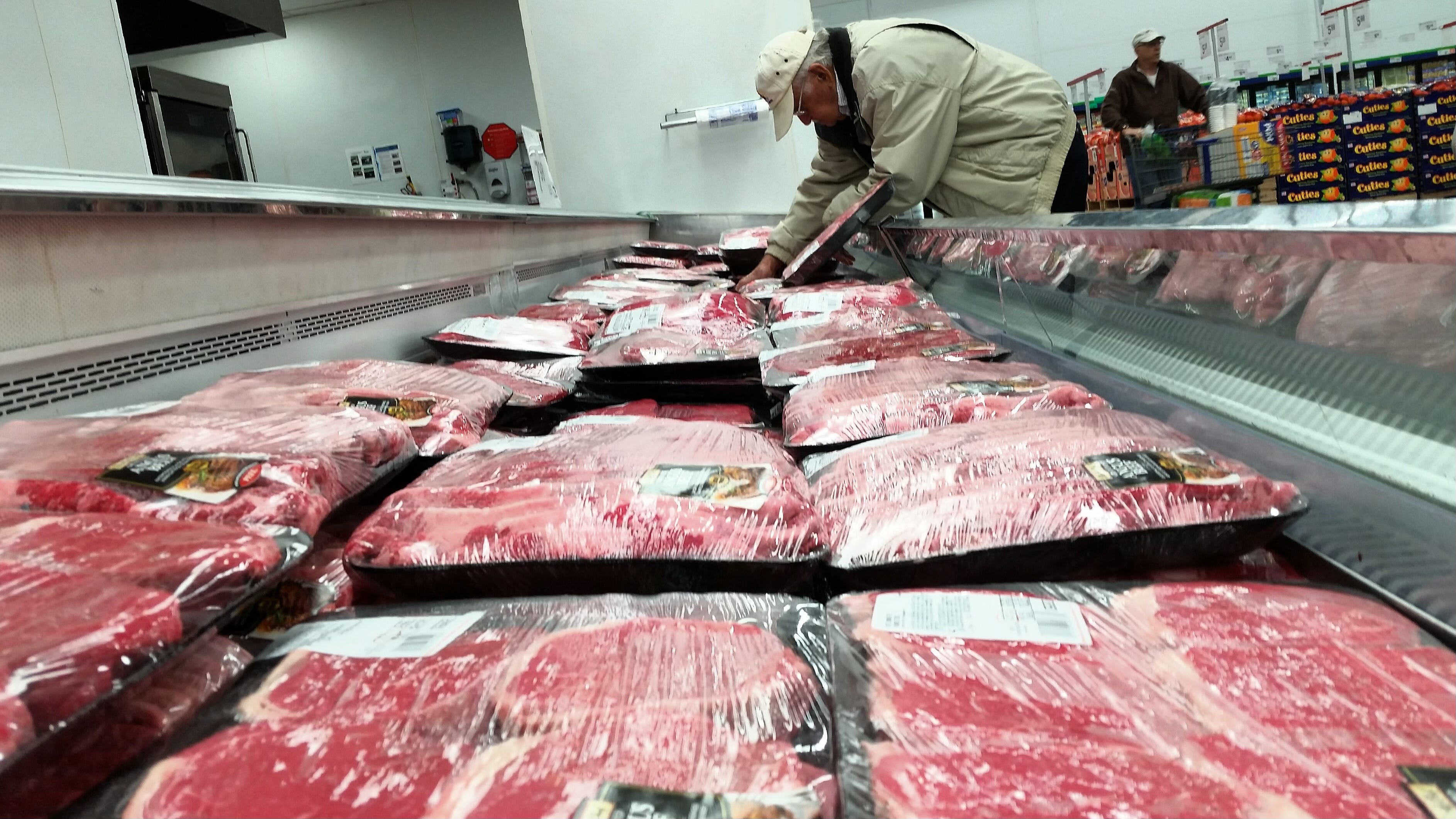
According to federal prosecutors, Agri Stats didn’t just collect industry data. It may have functioned as the coordination layer that allowed dominant meatpackers to align pricing, production, and margins—without ever picking up the phone.
If the DOJ is right, this case doesn’t just affect Big Meat.
It rewrites how antitrust law treats information sharing across agriculture, food, and beyond.
And if the DOJ is wrong?
Then one of the most aggressive antitrust theories in modern agriculture collapses with it.
Either way, the outcome will matter long after the headlines catch up.
The Quiet Target: What Agri Stats Actually Does
Agri Stats is a private benchmarking firm that collects detailed operational data from meat processors—covering everything from costs and output to margins and performance metrics.
In theory, benchmarking helps companies understand efficiency.
In practice, DOJ argues, highly granular, near-real-time data sharing among direct competitors can function as price signaling, even without explicit agreements.
The government’s claim is not that Agri Stats set prices.
It’s that by giving competitors an unusually clear view into each other’s operations, the system reduced competitive uncertainty—the very uncertainty antitrust law is designed to protect.
Why This Isn’t a Traditional Antitrust Case
Most antitrust cases rely on:
- price-fixing emails
- cartel meetings
- explicit coordination
This one doesn’t.
Instead, DOJ is advancing a more modern theory:
algorithmic or data-driven coordination.
The argument is simple—and radical:
You don’t need a conspiracy if the system itself synchronizes behavior.
If that theory holds, the consequences extend far beyond meatpacking.
The Stakes Are Bigger Than Beef
This case isn’t just about:
- chicken prices
- pork margins
- beef consolidation
It’s about whether shared analytics platforms themselves can become antitrust liabilities.
If DOJ wins, it sets precedent that could ripple into:
- agriculture benchmarking
- commodity trading platforms
- logistics optimization systems
- even ESG and carbon reporting frameworks
In other words, the same data transparency regulators often encourage could suddenly be framed as collusion.
That tension is why this case matters—even if you never touch a slaughterhouse.
Why You’re Not Seeing This Everywhere (Yet)
This case is:
- legally dense
- slow-moving
- deeply technical
- light on drama
It’s not algorithm-friendly.
There’s no verdict.
No settlement.
No visual hook.
That’s exactly why it’s valuable now.
Most outlets will show up when the decision drops.
Yanasa shows up before the decision explains the industry.
DOJ’s Legal Theory—In Plain English
The U.S. Department of Justice is not alleging a classic cartel.
There are no claims of secret meetings.
No recorded calls agreeing on prices.
No single “smoking gun” document.
Instead, DOJ’s theory is this:
Highly detailed, near-real-time information sharing among direct competitors can itself suppress competition—even without an explicit agreement.
According to prosecutors, Agri Stats created a system where companies could see:
- how competitors were performing,
- where margins were tightening or expanding, and
- how production decisions were shifting—
with enough precision that firms could adjust behavior in parallel.
In antitrust terms, DOJ argues this reduced competitive uncertainty, the engine that forces companies to undercut one another.
If uncertainty disappears, competition can soften—even if everyone insists they acted independently.
Why Information Sharing Used to Be Legal—and Why That’s Changing
For decades, courts allowed industry benchmarking under certain conditions:
- data was aggregated
- data was historical, not current
- individual competitors couldn’t be reverse-engineered
- the goal was efficiency, not coordination
Agri Stats and its clients argue their practices fit squarely within that tradition.
DOJ argues the world has changed.
With modern analytics, granular datasets, and rapid reporting cycles, prosecutors say the effect of sharing now matters more than intent. Even lawful-looking exchanges can cross the line if they shape market behavior.
This case is less about whether benchmarking is legal—and more about where the line now sits in a data-driven economy.
The Agri Stats Timeline (Why This Took So Long)
This case didn’t appear overnight.
- Years of quiet investigation: DOJ examined industry data practices long before filing publicly.
- Civil antitrust complaint filed: Alleging unlawful information sharing through Agri Stats.
- Discovery battles: Focused on what data was shared, how often, and how it was used internally.
- Pretrial rulings: Narrowed or clarified which theories DOJ can pursue.
- Ongoing litigation: With no quick resolution in sight.
This slow pace is typical for structural antitrust cases. By the time a verdict or settlement arrives, the groundwork will have been laid over years—not months.
What Happens If DOJ Wins vs. Loses
If DOJ Wins
- Information-sharing platforms across agriculture face scrutiny
- Compliance rules around benchmarking tighten dramatically
- Similar cases spread into other sectors
- “We didn’t agree on prices” becomes a weaker defense
This would mark a significant expansion of antitrust enforcement into systems and infrastructure, not just conduct.
If DOJ Loses
- Courts rein in DOJ’s data-driven coordination theory
- Benchmarking survives, but with clearer legal guardrails
- Regulators pivot back toward traditional enforcement strategies
Either outcome reshapes how antitrust law is argued going forward.
Why Producers—not Just Packers—Should Be Watching
This case is often framed as Big Meat versus the DOJ.
That framing is incomplete.
If DOJ’s theory succeeds, it affects:
- grower contracts
- pricing transparency
- performance reporting systems
- third-party analytics used throughout agriculture
Producers who rely on shared data, cooperative reporting, or industry benchmarks could find themselves operating under new compliance expectations—even if they never spoke to a competitor.
When enforcement theories expand, they rarely stop at the top of the supply chain.
Why This Matters Now
By the time a verdict or settlement hits, the narrative will already be set.
This subscriber section exists so you understand:
- what DOJ is actually arguing,
- why this case is different, and
- why its consequences extend well beyond meatpacking.
When the headline finally reads “DOJ Wins” or “DOJ Loses,” the real story won’t be the outcome.
It will be what changes next.
And that story starts here.